
Introduction
Semantic SEO has become one of the most important parts of ranking on Google in 2025. Traditional keywords don’t work the way they used to, and search engines now care more about meaning, context, and user intent. That’s why many USA businesses look for Ben Stace Semantic SEO Consultancy Services to help them grow online. This type of service focuses on understanding topics, building authority, and improving how Google understands your website.
You’ll find this guide easy to follow, even if you’re brand new to SEO. We’ll walk through what semantic SEO really is, how consultants use it, and why USA companies rely on it to get ahead. By the end, you’ll know exactly how this approach works and how it can improve your visibility.
What Is the Ben Stace Semantic SEO Writing Tool
Understanding the Tool in Simple Terms
The Ben Stace semantic SEO writing tool helps businesses create content that Google understands more clearly. It examines the meaning behind keywords rather than counting the number of times a phrase appears. Consultants use it to find related ideas, entities, and topics that build stronger authority. This makes content more natural and more aligned with user intent.

Additionally, the tool highlights important connections that many beginners overlook. It shows which topics belong together and which terms match real user behavior. This approach helps websites grow faster because the content becomes more complete.
How Consultants Use It for Better SEO
Experts use the tool to build topic clusters, optimize on-page content, and strengthen internal links. They also use it to support structured data, so search engines understand each page. Semantic SEO relies on entities, relationships, and context, and the tool makes this process easier.
For example, a consultant may use the tool to map out “roof repair,” “roof inspection,” and “emergency roof service.” These connected terms help Google link your content to similar search patterns.
Why Semantic SEO Matters More Than Ever
Google’s Shift Toward Meaning and Intent
Search engines have changed dramatically. Algorithms like BERT and MUM read content almost like humans. They focus on meaning, not keywords. Because of this, semantic SEO has become essential for USA businesses that want lasting rankings.
For example, if someone searches “best dentist for kids,” Google reads the intent behind “kids,” “family,” and “trust.” Semantic SEO helps you match that intent.
How Semantic SEO Improves Business Visibility
When your pages cover real topics deeply, Google sees your website as an authority. This results in more impressions, stronger rankings, and a bigger online presence. Many consultants use entity mapping and knowledge graph optimization to build credibility.
On the other hand, businesses that ignore semantic SEO usually struggle with thin content and limited rankings. This is why USA companies rely on consultants who specialize in this approach.
How the Ben Stace Semantic SEO Consultancy Process Works
Building a Smart Optimization System
Consultants follow a structured process to improve your content. They start with research, then study competitors, and finally adjust their site around meaning and context. This step-by-step approach creates a foundation that helps your site grow long-term.
In many cases, consultants also analyze your internal links, schema, and topical authority. These factors play a big role in modern rankings.
Using Data to Understand Your Audience
Semantic consultants look at user intent to understand what your visitors really want. They use contextual SEO improvements to refine your pages and enhance clarity.
This makes your content useful, trustworthy, and easier to rank.
In addition, they may use tools for entity extraction and tagging to connect your topics to Google’s Knowledge Graph.
Step-by-Step Content Optimization Process
Keyword and Topic Research for USA Businesses
Consultants begin by researching the main topic and finding related subtopics. They look for search patterns, long-tail variations, and entity-based terms. This helps create a broad understanding of what users need.
For example, if your business focuses on HVAC repair, a consultant will map terms like “AC repair,” “thermostat troubleshooting,” and “home cooling problems.”
Competitive Analysis Using Semantic Signals
Experts analyze top-ranking competitors to see why their pages perform better. They study content depth, structure, schema, and topic clusters. This reveals what your site is missing.
In many cases, this analysis uncovers hidden opportunities. You may discover angles competitors haven’t covered, which helps your content stand out.
Content Structuring and Semantic Mapping
Creating Topic Clusters and Clear Layouts
Consultants build topic clusters around your main service or product. Each cluster includes subtopics that support your main page. This system makes it easier for users to navigate your content.
For example, a “digital marketing” cluster may include pages about SEO, social media, email marketing, and paid ads.
Building a Natural Internal Linking Framework
Semantic SEO relies heavily on internal links. Consultants connect related pages so Google understands the relationships between them. This improves topical authority and ranking potential.
In addition, internal links help users stay longer on your site, which boosts engagement metrics.
Writing With Semantic Precision
Using LSI and Entity-Based Keywords Naturally
Good consultants use LSI keywords, NLP-driven research, and semantic terms to improve relevance. These keywords help search engines categorize your content correctly.
This doesn’t mean stuffing words everywhere. Instead, it means using natural, conversational language that fits the topic.
Improving Clarity and Engagement
Semantic writing focuses on helping readers understand your message easily. Consultants adjust tone, examples, and structure to keep things clear. This keeps users on your site longer.
In addition, simple language improves accessibility and overall user satisfaction.
Final Optimization & On-Page Enhancements
Improving Technical and On-Page Signals
Consultants update titles, meta descriptions, headers, and internal links. They also add schema markup to support better search engine understanding.
These tasks help Google recognize your content’s purpose and increase your chances of showing up in rich results.
Ensuring Search Intent Alignment
On-page optimization also includes refining your message so that it meets user expectations. Consultants adjust headings, flow, and examples to match what people are searching for.
In addition, they remove filler content to ensure your pages stay focused and helpful.
Why Local Businesses in the USA Need Semantic SEO Today
Matching Local Intent More Accurately
Local search relies heavily on meaning and context. Semantic SEO helps Google understand what your business offers and who you serve. This increases your visibility in local results.
For example, a “plumber in Dallas” page can rank for variations like “Dallas drain cleaning” or “emergency plumber nearby” when optimized semantically.
Beating Larger Competitors Through Precision
Small businesses often struggle to compete with national brands. Semantic optimization gives them an edge by targeting specific user needs. This helps them show up for more detailed searches.
Local companies benefit from an entity-based SEO strategy because it builds trust and authority in their niche.
Benefits for Local SEO
Improved Map Pack Rankings
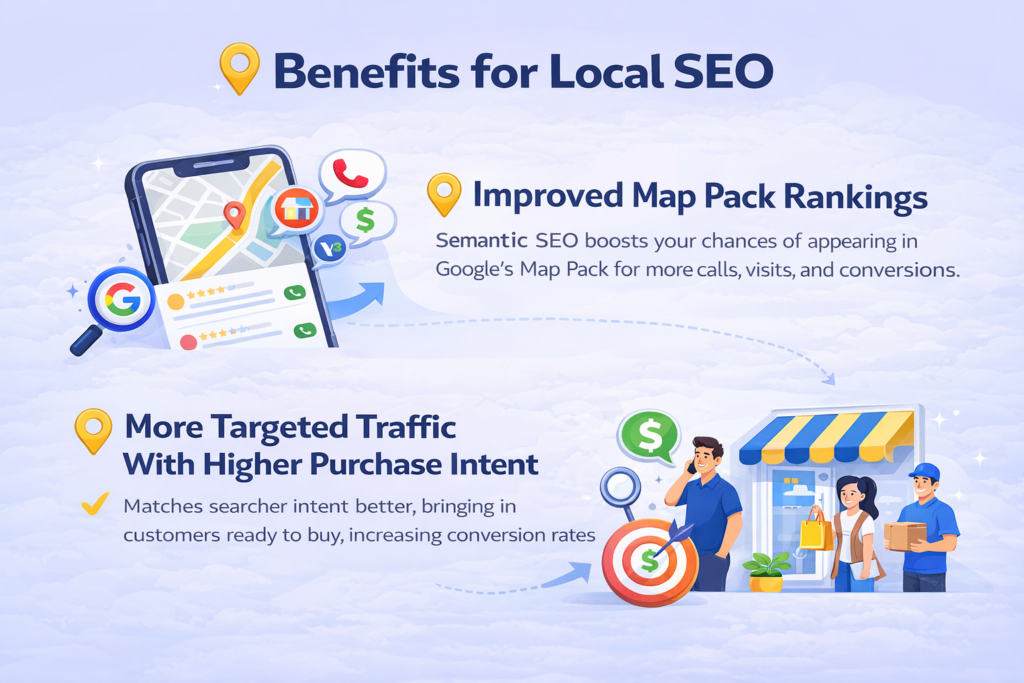
Semantic SEO helps clarify your business details, which boosts your chances of showing up in Google’s Map Pack. This leads to more calls, visits, and conversions.
In addition, structured data SEO techniques strengthen your local presence.
More Targeted Traffic With Higher Purchase Intent
When your content matches user intent more closely, you attract customers who are ready to take action. This makes your traffic more valuable.
On the other hand, generic keyword SEO brings broad visitors who may not convert.
Real-Life Results From Semantic SEO Clients
Growth Through Topic Expansion
Many businesses see great improvements after implementing semantic SEO. Some double their traffic by adding missing entities, topics, and FAQs.
In addition, these changes often lead to better engagement and lower bounce rates.
Case Studies Showing Long-Term Gains
Consultants often share examples where clients saw major ranking improvements within months. These results come from building topic clusters and improving site structure.
For example, a small clinic increased visibility by creating content around symptoms, treatments, and FAQs, all supported by semantic signals.
What Makes the Ben Stace Semantic SEO Writing Tool Stand Out?
Precision in Semantic Analysis
The tool analyzes meaning, context, and relationships between terms. It doesn’t rely on outdated keyword matching. This approach improves relevance and ranking potential.
Consultants use these insights to build stronger content strategies.
Real-Time Suggestions for Stronger Content
Writers receive live suggestions that help them improve clarity, structure, and semantic depth. This streamlines the writing process.
As a result, businesses produce better content with less effort.
Integrations and Workflow Benefits
Smooth Use With WordPress and Google Docs
The tool integrates easily with popular platforms, which helps teams write and optimize content without switching systems. This saves time and reduces errors.
For example, consultants can edit drafts directly inside Google Docs with semantic recommendations.
Affordable and Scalable for All Business Types
The pricing model fits freelancers, agencies, and enterprise teams. This makes it a flexible choice for USA companies.
On the other hand, many SEO tools are expensive and harder for beginners to understand.
How Ben Stace’s Semantic SEO Consultancy Services Help USA Businesses
Customized Strategy Development
Consultants create custom plans based on your industry, audience, and goals. They analyze gaps, user intent, and topic opportunities
This tailored approach leads to higher rankings and stronger authority.
Done-For-You Optimization Packages
Some businesses prefer hands-off solutions. Consultants offer full optimization, from keyword research to content editing.
In addition, they help maintain consistency across your site.
How VConekt Can Help You Implement Semantic SEO
Expert Guidance and Strategic Planning
VConekt Agency works closely with USA businesses to turn semantic SEO into a clear and simple plan. Their team studies your industry, competitors, and customer behavior to build a strategy you can follow easily. This makes the process less overwhelming, especially if you’re new to SEO.
In addition, their consultants use advanced tools to map entities, identify gaps, and improve your overall structure.
Hands-On Support From Trained Professionals
The agency provides step-by-step help throughout the optimization process. They adjust your content, improve your internal links, and build your topic clusters. This ensures your website stays aligned with search intent.
Many companies appreciate this support because it brings predictable results without guesswork.
VConekt Agency: Your Local SEO Powerhouse
Helping USA Businesses Win Locally
VConekt specializes in local search, which helps small and medium businesses rank for city-specific and “near me” searches. They take the time to understand your service area and your target customers.
This focus leads to stronger local rankings and more qualified leads.
Using Semantic SEO to Build Trust
The agency combines semantic SEO with strong E-E-A-T signals. They add structured data, improve site architecture, and refine your topical depth. These elements build trust with both users and search engines.
As a result, your business becomes a recognized authority in your niche.
Why Choose VConekt for Semantic SEO Consultancy?
Proven Experience and Real Results
VConekt has a history of helping clients improve their rankings through semantic optimization. They understand how Google interprets content and use this knowledge to guide your strategy.
In addition, they monitor your progress and adjust your plan as needed.
Transparent Reporting and Clear Communication
The agency shows you every step of the process. You’ll always know what changes were made and why. This transparency helps build confidence, especially if you’ve been confused by SEO before.
Clear communication also means faster decisions and better long-term outcomes.
Best Practices for Getting Maximum Results With Semantic SEO
Focus on User Intent and Clear Answers
Semantic SEO works best when your content speaks directly to user questions. You should answer the main intent early and add helpful examples for clarity. This keeps visitors engaged.
Consultants often refine headlines, improve flow, and remove confusing phrases so your message stays clear.
Update and Expand Content Regularly
Search behavior changes, and your content should evolve with it. Adding new FAQs, examples, or related subtopics can boost relevance. In addition, updating old posts with new semantic terms helps maintain rankings.
This ongoing improvement strengthens your topical authority.
Future of Semantic SEO and AI-Driven Search
How AI Is Changing Search Behavior
Google now uses AI systems that understand context and meaning better than ever. These systems look at entities, patterns, and relationships to match user needs. Because of this, semantic SEO will remain essential for USA businesses.
In addition, AI-driven results often pull from sites with strong structured data and clear topical structures.
Why Consultants Will Become Even More Important
AI will continue shaping search results, and consultants will help businesses adapt. They’ll refine strategies, interpret user behavior, and guide you through constant algorithm updates.
As search becomes more conversational, semantic optimization will play a central role in your success.
FAQ’s
What are Ben Stace’s Semantic SEO Consultancy Services?
These services help businesses improve their rankings by focusing on meaning, context, and user intent. Consultants analyze your topics and optimize your content so search engines understand it better.
How does semantic SEO improve rankings?
It helps Google connect your content to related topics and user intent. This increases your visibility for more searches.
Is semantic SEO good for local businesses?
Yes. It helps local companies match city-specific and “near me” searches more accurately.
Can consultants fix my existing content?
They can. Consultants update your structure, add missing entities, and remove weak sections to improve clarity.
How long before results appear?
Most businesses see improvements within a few months, although some notice progress sooner.
Conclusion
Semantic SEO has become a vital part of growing any online presence. When you work with professionals who understand entities, intent, and context, you unlock new opportunities for better visibility.
Ben Stace Semantic SEO Consultancy Services gives USA businesses a clear advantage by improving topical authority, site structure, and user experience. This approach helps your company stand out in a competitive digital world.